

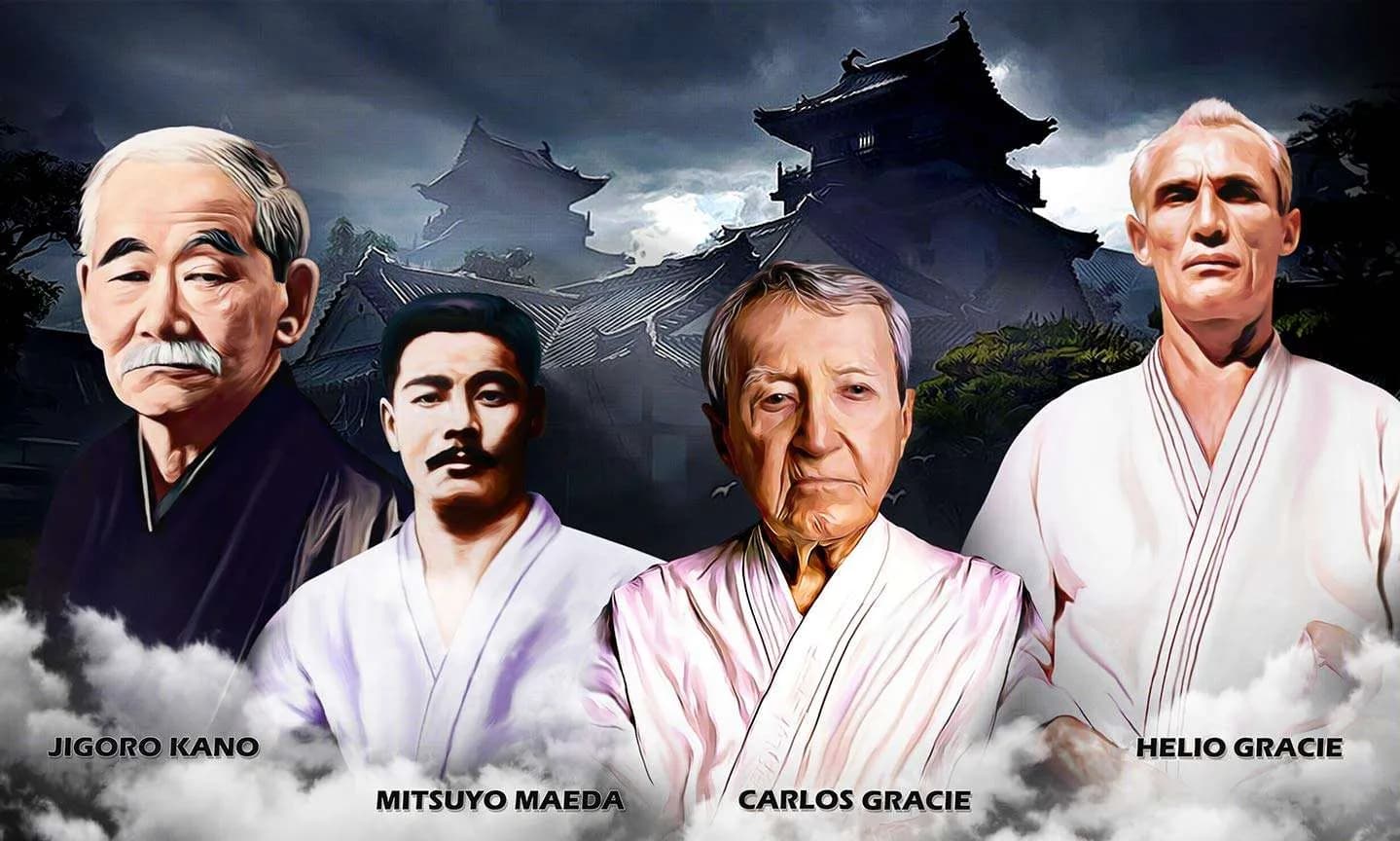
Introduction: Bridging Cultures Through Martial Arts
As we continue our exploration into the history of Jiu Jitsu, we now transition from the samurai origins detailed in Part 1 of our series. In the Edo period, the samurai, once fierce warriors of feudal Japan, found themselves in a world where the pen outweighed the sword. The necessity for martial prowess on the battlefield diminished, and martial arts evolved from essential combat skills to avenues for personal development, discipline, and physical fitness. It was within this crucible of societal transformation that Judo was born. Kanō Jigorō, a visionary young man, perceived the inherent limitations within the traditional Jiu Jitsu schools of his time. In 1882, Kanō pioneered a revolutionary approach by distilling Jiu Jitsu into Judo, emphasizing safety, sport, and the philosophical tenet of mutual benefit. This marked not just the evolution of a martial art but the birth of a global phenomenon, establishing Judo not only as a legacy of Japan’s martial tradition but as a cultural bridge to the wider world.
The Transition to Peace and the Birth of Judo
As Japan transitioned from the turbulent Sengoku period (~1467 - 1615) to the more peaceful Edo period (~1603 - 1868), the societal role of the samurai underwent a profound transformation. No longer primarily warriors, samurai became bureaucrats and administrators, yet their dedication to martial arts endured. In this new era, the emphasis shifted from battlefield applications to a focus on personal development, discipline, and physical education—a reflection of the broader societal embrace of peace and order.
In this environment of cultural and social refinement, Kanō Jigorō, a young scholar and educator, perceived a significant opportunity within the traditional Jiu Jitsu schools. Observing their emphasis on combat effectiveness, Kanō envisioned a martial art that also fostered personal and ethical development. In 1882, he founded Judo, introducing a system that not only incorporated the physical techniques of Jiu Jitsu but was deeply rooted in philosophical principles that were innovative for the time.
Kanō’s Judo was built on the concepts of "Seiryoku Zenyo" (maximum efficiency, minimum effort) and "Jita Kyoei" (mutual welfare and benefit). These philosophies were revolutionary, advocating that the study of Judo was not only for personal improvement but also for the benefit of society. Through Judo, Kanō sought to educate and cultivate individuals who could contribute positively to society, aligning martial training with moral and civic virtues.
Kanō's vision extended beyond Japan’s borders. He was an early and proactive international ambassador of Judo, believing strongly in its potential to bridge cultural gaps. He sent his disciples, including Mitsuyo Maeda, to various parts of the world to demonstrate Judo’s effectiveness and to teach its principles. This strategy was part of a broader Japanese effort to enhance its international stature and to share its culture globally, which coincided with Japan's modernization and growing engagement with the international community. This narrative not only underscores the profound shifts within Japan but also highlights Judo’s role as a cultural bridge, connecting diverse communities through shared values of discipline, improvement, and mutual respect. Kanō’s innovations would propel Judo to a global stage, culminating in its inclusion in the Olympics since 1964, thus cementing its status as a major martial art.
Video of Judo founder Kanō Jigorō: Jigoro Kano
Brazilian Jiu Jitsu: Unity, Division, and Global Expansion
Upon arriving in Brazil, Maeda continued his career as a prizefighter, which he had begun while traveling through the Americas. Known by the moniker "Conde Koma," Maeda's prizefighting was not just a way to make a living but also served as a practical demonstration of Judo's effectiveness in real combat situations. He engaged in numerous no-holds-barred contests, which were a blend of wrestling, boxing, and other fighting techniques prevalent at the time. These contests greatly enhanced his reputation and showcased the practical application of Judo techniques in fights that were not bound by strict rules.
His prowess in these contests did more than entertain; they provided tangible proof of Judo’s utility, bridging the gap between traditional dojo practice and real-world application. This aspect of his career helped lay the groundwork for what would later become a hallmark of Brazilian Jiu Jitsu—its emphasis on practical, effective techniques suitable for unscripted combat.
Figure 1: Mitsuyo Maeda
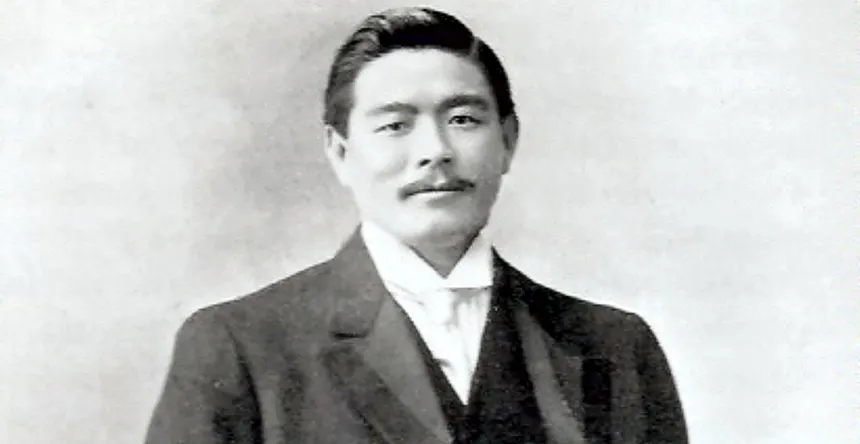
Mitsuyo Maeda c. 1910. Source: Wikipedia
In Brazil, Maeda's path intersected with that of Gastão Gracie, a local influential businessman. This meeting was fortuitous; Gastão, recognizing the value of Judo, facilitated Maeda's integration into Brazilian society. As a token of appreciation, Maeda began teaching Judo to Gastão's son, Carlos Gracie. This transmission of knowledge was not merely the teaching of combat techniques but the planting of a seed that would grow into Brazilian Jiu Jitsu (BJJ).
Through Maeda’s teachings, the Gracie family would further adapt and evolve these techniques, emphasizing ground fighting and submissions—elements that would come to define Brazilian Jiu Jitsu and distinguish it from both traditional Judo and other martial arts.
Figure 2: Carlos Gracie
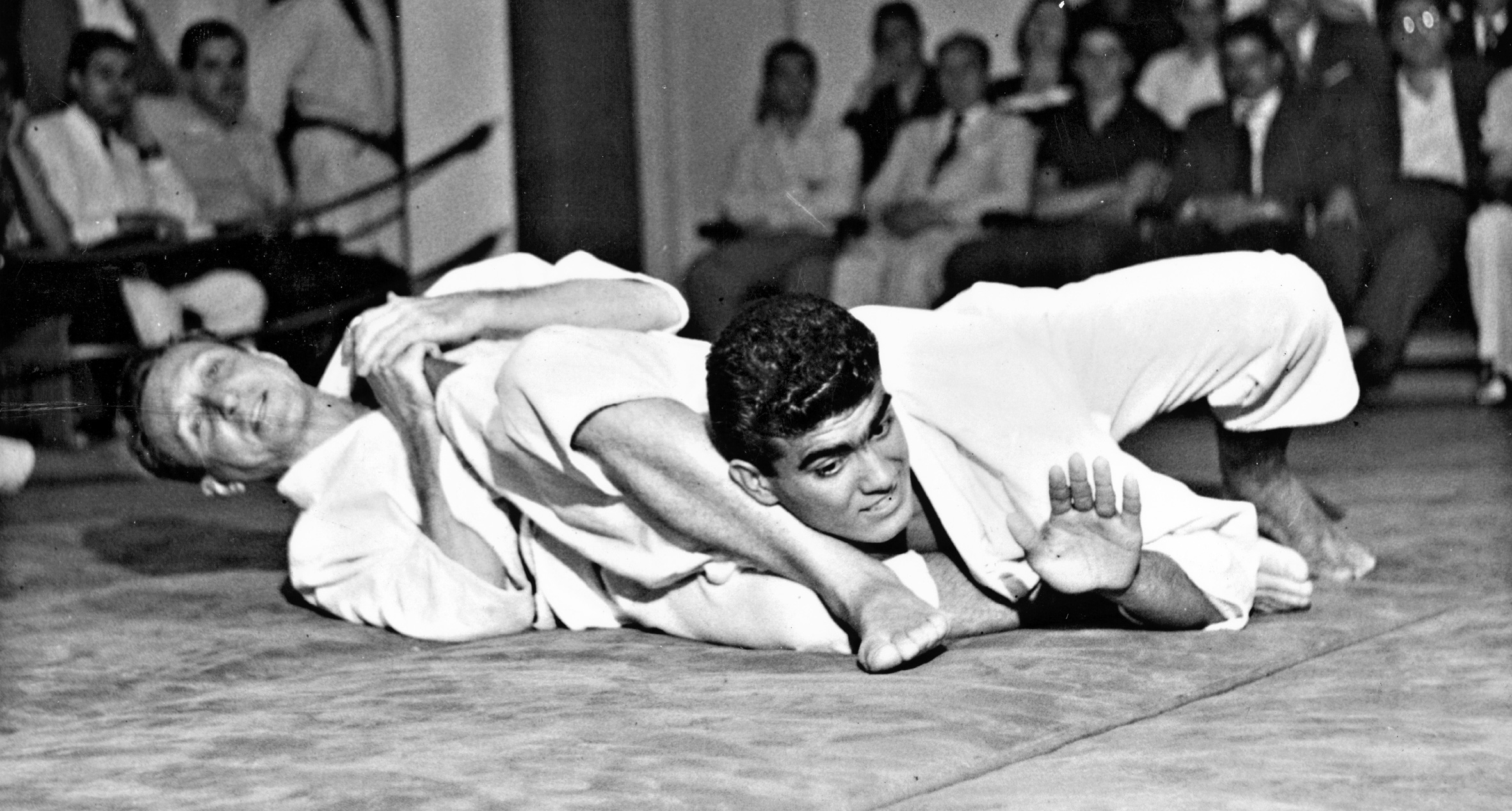
Carlos Gracie Sr. (left) applying an armbar submission. Source: BJJ Heroes
Amid their rise, the Gracie family embarked on a bold campaign to validate BJJ's supremacy in the martial arts world. Beginning in the 1920s, these endeavors, known as the "Gracie Challenges," saw members of the Gracie family and their students visiting various martial arts schools—often unannounced—to challenge practitioners to matches. These confrontations, sometimes referred to as "dojo storms," were not merely displays of prowess but strategic efforts to prove BJJ's effectiveness against other martial arts styles. Through victories in these challenges, the Gracies demonstrated BJJ's dominance, solidifying its reputation as a formidable martial art. This aggressive approach to promotion and the practical demonstration of BJJ's principles in real-world confrontations were instrumental in establishing BJJ as a premier martial art on the global stage.
Link to Gracie Challenge fights: Unseen Gracie Challenge Fights
The Helio Gracie vs. Masahiko Kimura Match
On October 23, 1951, Helio Gracie faced Masahiko Kimura, one of Japan's greatest judokas, in a submission grappling match held in Rio de Janeiro, Brazil. The bout is one of the most storied encounters in martial arts history, symbolizing the clash of cultures, techniques, and the indomitable spirit of Jiu Jitsu.
At the time, Kimura was widely regarded as the world's best judo practitioner, and his challenge against Helio Gracie was seen as a monumental test for BJJ. The match was not just a personal contest but a symbolic showdown between Japanese judo and the Brazilian adaptation of Jiu Jitsu that the Gracies were promoting. Helio Gracie, despite being significantly lighter and less experienced in judo than Kimura, accepted the challenge, embodying the BJJ maxim that technique, leverage, and intelligence could prevail over sheer strength and size. The match drew considerable attention, pitting the smaller, BJJ practitioner against a judo world champion.
The bout was intense and demonstrated the technical prowess of both fighters. However, Kimura's strength and judo technique ultimately proved overwhelming for Helio. Kimura secured a victory by applying a reverse ude-garami (arm entanglement), a shoulder lock that threatened to break Helio's arm. Refusing to submit, Helio continued to fight until his corner threw in the towel to prevent serious injury.
In the historic match between Helio Gracie and Masahiko Kimura, it was Helio's older brother Carlos Gracie who made the decision to throw in the towel. Carlos's action to intervene by throwing in the towel was a pivotal moment, underscoring the seriousness of the situation and his concern for Helio's well-being. This decision effectively ended the match, demonstrating the Gracie family's commitment to the safety and health of its members, even in the face of a highly competitive and prideful environment. The moment also highlighted the depth of the bond within the Gracie family, as they navigated the challenges and risks inherent in martial arts competition. The move used by Kimura to win the match was later named the "Kimura lock" in BJJ circles, in honor of the judoka's victory.
Link to Gracie vs Kimura: Gracie vs. Kimura - October 23, 1951 (Maracanã Stadium - Rio de Janeiro, Brasil)
The match had a profound impact on the martial arts world. It demonstrated the effectiveness of judo and, at the same time, showcased the resilience and technical skill inherent in BJJ. Helio's willingness to face an opponent of Kimura's caliber and his refusal to give up even in the face of defeat earned him and BJJ widespread respect.
Moreover, the encounter between Helio Gracie and Masahiko Kimura served as a catalyst for the development of BJJ. It inspired the Gracie family and other practitioners to refine their techniques further, emphasizing adaptability, leverage, and the importance of ground fighting—elements that have become trademarks of BJJ.
The Helio Gracie vs. Masahiko Kimura match remains one of the most iconic moments in the history of martial arts, symbolizing the courage to challenge limits, the pursuit of technical mastery, and the unyielding spirit that defines BJJ.
Helio Gracie vs. Carlos Gracie: Philosophical and Methodological Differences
The story of BJJ is deeply intertwined with the Gracie family's history, marked by pivotal contributions, internal disagreements, and splits that shaped the future of the martial art. At the heart of BJJ's evolution are two key figures: Helio Gracie and Carlos Gracie, whose differing philosophies and teachings laid the foundation for distinct branches within the art.
Carlos Gracie, after learning from Mitsuyo Maeda, began teaching Jiu Jitsu in Brazil, emphasizing a comprehensive approach that included physical fitness, nutrition, and a holistic lifestyle. Carlos’s teachings formed the initial groundwork for what would become BJJ. He also established the first Gracie Academy, where he and his brothers, including Helio, taught.
Helio Gracie, younger and physically smaller, adapted Carlos's techniques, focusing on leverage and timing to account for his lack of size and strength. Helio's adaptations emphasized the use of BJJ by smaller and weaker individuals against larger opponents, a principle that would become a cornerstone of BJJ philosophy. This divergence in focus led to distinct approaches within the family: Carlos's more traditional, broad-spectrum method versus Helio's specialized, leverage-based techniques.
The Rorion Gracie Era, Ultimate Fighting Championship (UFC), and Family Disputes
The expansion of BJJ to the global stage was significantly influenced by Rorion Gracie, Helio’s son, who moved to the United States in 1978 with the vision of showcasing BJJ to the world. Rorion was instrumental in creating the Ultimate Fighting Championship (UFC) in 1993, which served as a platform to demonstrate BJJ's effectiveness in mixed martial arts (MMA) competition. Royce Gracie's victories in early UFC events, under Rorion's guidance, put BJJ on the international map.
The foundational principle that BJJ allows a smaller, weaker opponent to overcome a larger adversary via leverage was dramatically showcased in the early 1990s by Royce Gracie. Despite being lighter and physically smaller than his competitors, Royce, under Rorion's guidance, triumphed in the inaugural Ultimate Fighting Championships (UFC), a momentous series of mixed martial arts competitions. These victories not only propelled BJJ into the global spotlight but also highlighted the unparalleled efficacy of grappling techniques in genuine combat scenarios.
Figure 3: Royce Gracie
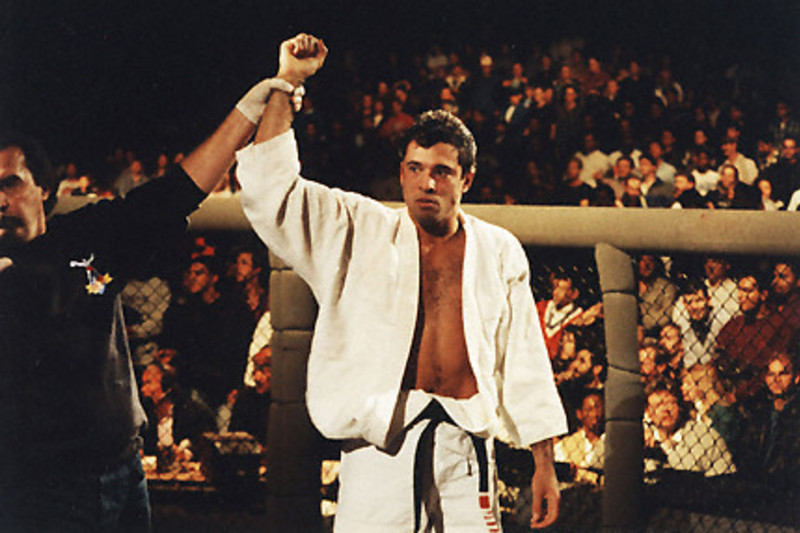
Royce Gracie at UFC 1 in 1993. Source: Bleacher Report
Link to UFC 1: UFC 1 the beginning . COMPLETO
However, Rorion's business practices led to further disputes within the Gracie family. His efforts to trademark elements of BJJ, including the term "Gracie Jiu Jitsu," and to control the narrative and commercial aspects of BJJ's expansion in the United States, caused friction among family members. Some perceived Rorion's actions as monopolizing BJJ's representation and profiting at the expense of the broader Gracie family and the global BJJ community. This tension highlighted the delicate balance between preserving family legacy and adapting to the commercial realities of global expansion.
The Gracie family's internal disputes extended into legal battles, most notably involving Rorion Gracie. A significant point of contention was Rorion's legal action against other family members over the use of the Gracie triangle, a symbol deeply associated with the Gracie Jiu Jitsu brand and legacy. The triangle, representing the foundational principles and strength of Gracie Jiu Jitsu, had become an emblematic logo used by various branches of the Gracie family in their gyms and merchandise.
Rorion, who had taken proactive steps to trademark aspects of Gracie Jiu Jitsu in the United States, including the Gracie triangle, sought to enforce these trademarks against family members who were using the symbol in their own BJJ schools and businesses. This legal dispute was particularly divisive, highlighting the complexities of balancing family ties with the commercial aspects of branding and intellectual property. The lawsuit underscored the deep rifts within the family, not just over the philosophical direction of BJJ but also over the control and commercial use of its symbols and legacy.
The legal battle over the use of the Gracie triangle symbolized a broader struggle within the family about the global spread and commercialization of BJJ. While Rorion aimed to protect what he saw as the integrity and authenticity of Gracie Jiu Jitsu, other family members viewed his actions as overly restrictive and detrimental to the promotion and growth of BJJ worldwide.
Despite these challenges, the Gracie family remains synonymous with BJJ, each branch contributing to its global popularity and evolution. The legal disputes and disagreements have, in many ways, fueled discussions about the nature of martial arts in the modern world, including issues of copyright, intellectual property, and the balance between preserving a legacy and encouraging innovation and growth within the sport.
Impact of the Splits
The splits within the Gracie family, both philosophical between Helio and Carlos and business-related with Rorion, have led to a rich tapestry of BJJ. Different branches of the Gracie family have emphasized various aspects of BJJ, from sportive competition to self-defense, and have established schools and organizations around the world promoting their unique interpretations of the art.
Despite these internal conflicts, the Gracie family's overall contribution to BJJ is undeniable. They have played a central role in developing and popularizing a martial art that now enjoys a passionate following worldwide. The disagreements and splits within the Gracie family reflect the dynamic nature of BJJ itself—a martial art constantly evolving through internal debate, external influence, and the diverse experiences of its practitioners.
Conclusion
The narrative of Jiu Jitsu, as it branched from the tatamis of Japan to the mats of Brazil, illustrates not merely a change of geography but a profound evolution of technique and philosophy. The Gracie family, through their refinements and challenges, not only honed the martial art but tested its mettle against varied combat styles, proving its effectiveness and versatility. Their endeavors, particularly the storied "Gracie Challenges," not only solidified Brazilian Jiu Jitsu's reputation as a formidable art form but also demonstrated a strategic acumen in marketing and practical application. As we stand at the precipice of contemporary martial arts, Brazilian Jiu Jitsu embodies more than just a system of combat; it represents a confluence of history, family legacy, and the relentless pursuit of martial efficacy. This legacy, punctuated by the iconic bout between Helio Gracie and Masahiko Kimura, underscores the resilience and adaptability of Jiu Jitsu. As we anticipate the next chapter in this storied martial journey, we reflect on how Brazilian Jiu Jitsu has not just transcended borders but has woven itself into the fabric of global martial culture, compelling practitioners and aficionados to continually evolve and adapt within an ever-expanding arena.
Eager to elevate your martial arts skills? Discover your true potential at Ground Game Theory, Miami's leading destination for No-Gi Jiu Jitsu and Mixed Martial Arts (MMA) catering to enthusiasts of all ages and abilities. Whether your passion lies in casual Jiu Jitsu practice, the thrill of competitive submission grappling, or mastering martial arts for self-defense, our academy offers a diverse range of classes tailored to meet every ambition. Click here to enroll in a complimentary 3-day trial and experience firsthand why we are recognized as the top martial arts academy in Miami, FL for both children and adults. Explore more by following the links provided below ↓
Website: https://groundgametheory.com
Instagram: https://instagram.com/groundgametheory
Facebook: https://facebook.com/GroundGameTheory
TikTok: https://tiktok.com/@groundgametheory
YouTube: https://www.youtube.com/@GroundGameTheory