

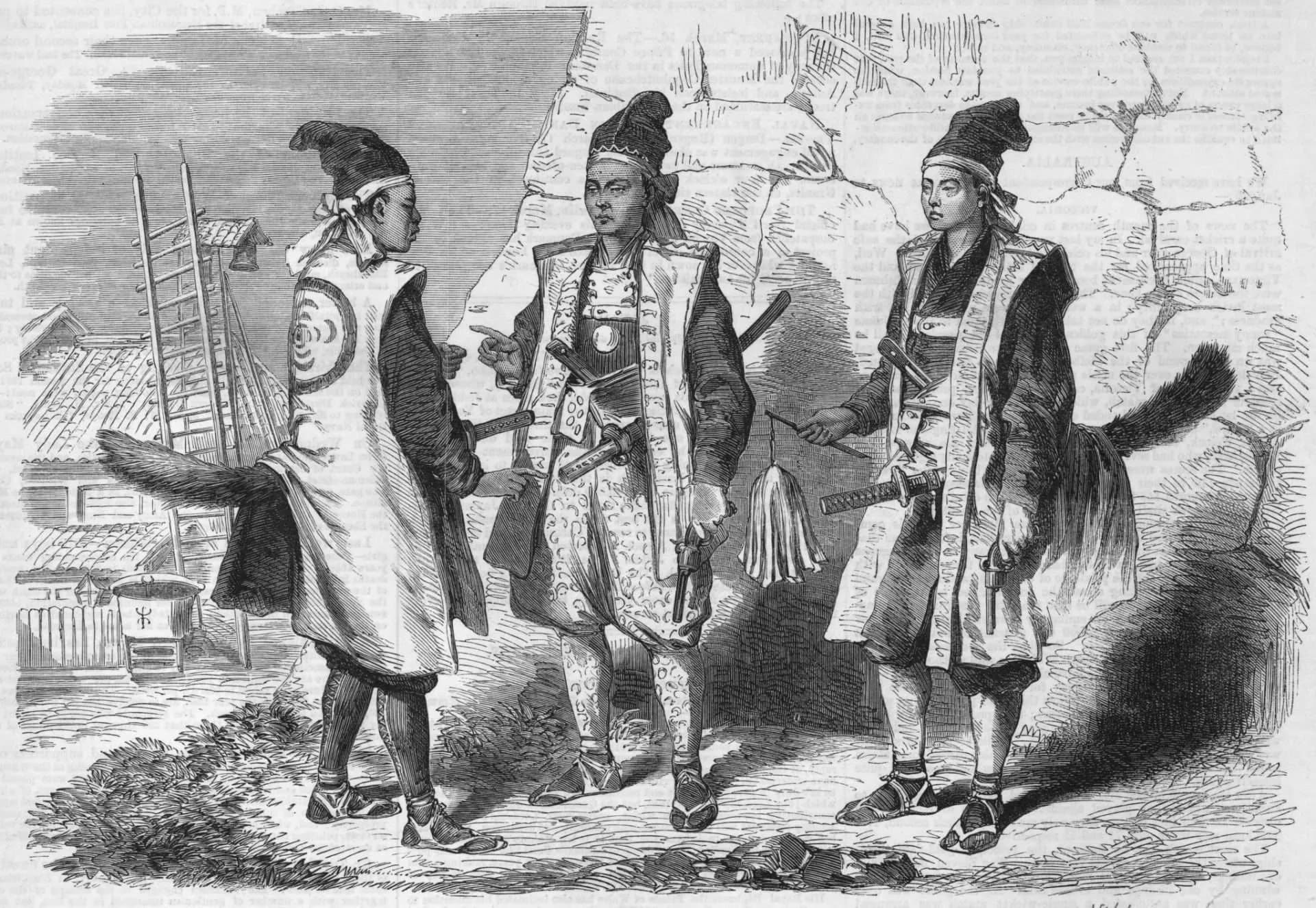
Part One of Our 3-Part Series on Jiu Jitsu's Evolution
Welcome to the first installment of our journey through the fascinating history of Jiu Jitsu. This series will uncover the evolution of Jiu Jitsu from its earliest days to its modern incarnations, demonstrating how this ancient martial art has adapted and thrived over centuries. In this opening post, we focus on the roots of Jiu Jitsu in feudal Japan, exploring the martial traditions and practices that laid the groundwork for what Jiu Jitsu would become.
In this article, we delve into:
The Early Martial Practices: The pre-16th-century martial arts tradition in Japan, not yet named Jiu Jitsu, which formed the basis of samurai combat and defense.
Integration into Jiu Jitsu: How these practices were formalized into Jiu Jitsu during the tumultuous Sengoku period, leading to the establishment of schools dedicated to teaching the art.
The Seed in Feudal Japan: The emergence of Jiu Jitsu among the samurai as a critical method of unarmed combat, emphasizing technique, leverage, and the strategic application of force.
This exploration into Jiu Jitsu's beginnings will set the stage for understanding its systematic development and the enduring principles that underpin this martial art. Stay with us as we trace the path of Jiu Jitsu from its samurai origins to its pivotal role in today's global martial arts community.
Pre-1530s Martial Practices
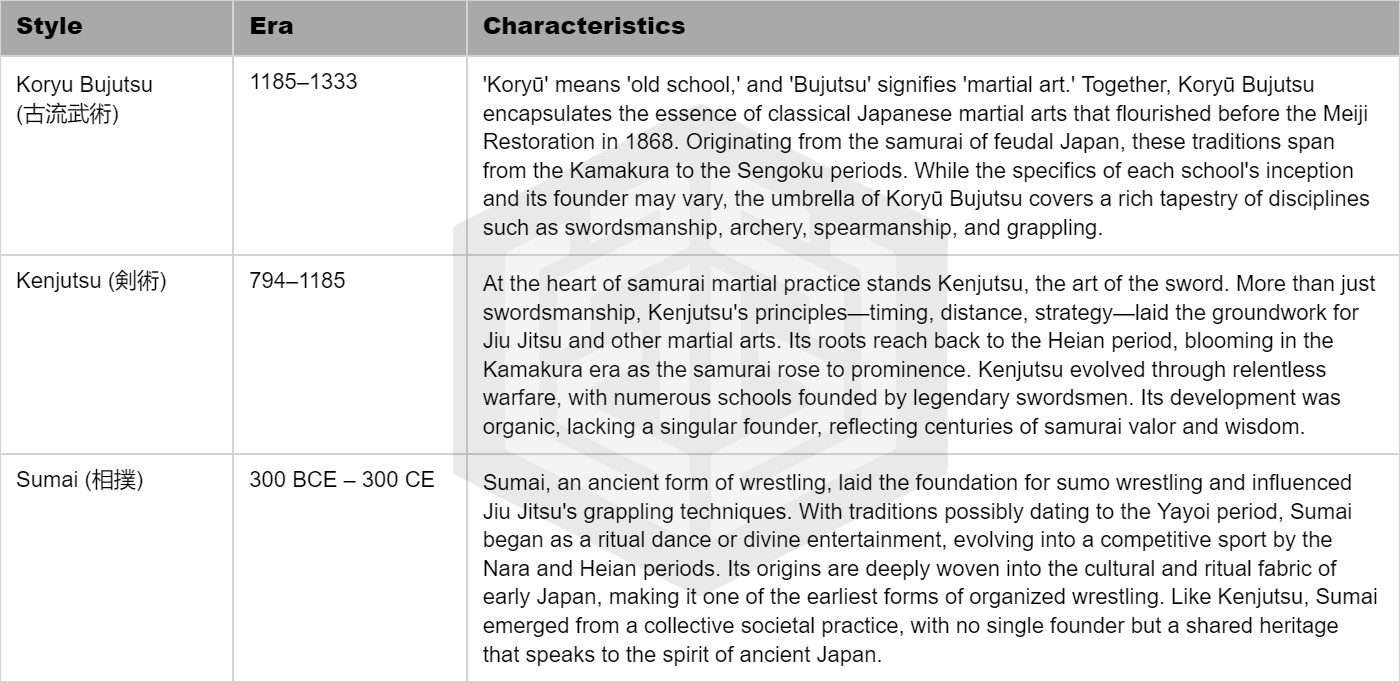
Prior to the 16th century, Japan had a rich martial arts tradition not yet known as "Jiu Jitsu." These early practices, part of a broader spectrum called bujutsu, were essential for samurai combat and self-defense, incorporating grappling, joint manipulation, striking, and weapons. These foundational techniques were the precursors to Jiu Jitsu and other martial arts, setting the stage for their systematic development.
Figure 1: Pre-1530s Japanese Martial Arts
Integration Into Jiu Jitsu
Figure 2: Samurai Armor, Sengoku Period
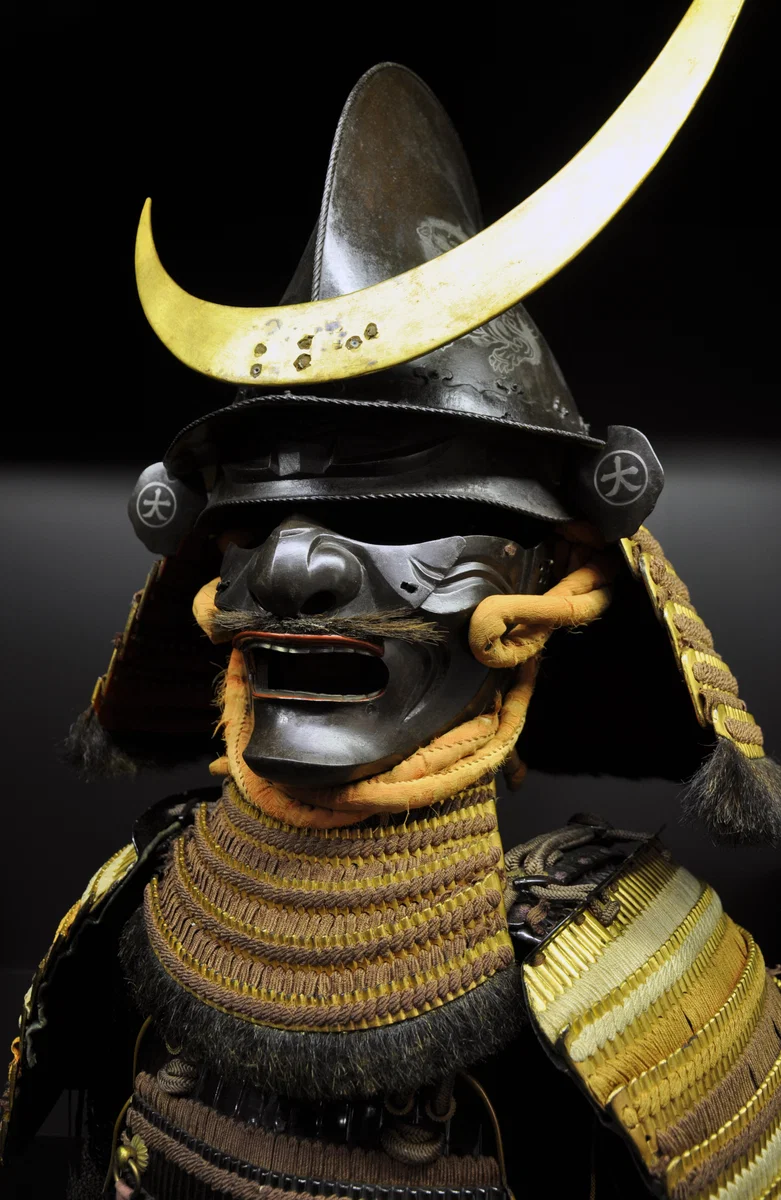
Samurai Armor, Sengoku Period
Source: Vassil
The martial practices from this era laid the groundwork for the formal development of Jiu Jitsu. As Japan transitioned towards the Sengoku period (1467–1615), a time of near-constant military conflict and social upheaval, the need for effective hand-to-hand combat techniques became increasingly apparent. This environment spurred the formalization of martial arts schools, including those dedicated to Jiu Jitsu, in the late 15th and early 16th centuries. These early martial arts schools, or ryu, integrated and codified the disparate martial techniques that had been developed over centuries, creating more structured curricula that could be taught systematically. This period of organization and formalization marked the transition from varied and often familial or clan-based martial practices to recognized martial arts schools specializing in jiu jitsu, profoundly impacting martial arts development in Japan and eventually around the world.
The Seed in Feudal Japan
Tracing back to feudal Japan, Jiu Jitsu—or jujutsu—emerged among the samurai as a method of combat effective even when disarmed. Focusing on technique and leverage rather than brute strength, it offered a strategic advantage in close combat. Unlike striking-based martial arts, traditional Jiu Jitsu placed a higher emphasis on throws, pins, and joint locks, adapting strikes primarily as setups for grappling techniques.
These traditional Japanese Jiu Jitsu systems typically placed more emphasis on throwing, pinning, and joint-locking techniques compared to striking martial arts such as karate or taekwondo, which rely more on punching and kicking. Most older Japanese systems considered striking techniques less important due to the protection provided by samurai body armor and because they were deemed less effective than throws and grappling (though some styles of Jiu Jitsu placed a heavier emphasis on strikes than others). However, they found good use of strikes as setups for their grappling techniques.
The earliest recorded use of the word "Jiu Jitsu" occurred nearly 500 years ago, in 1532, when Hisamori Tenenuchi coined the term and officially established the first Jiu Jitsu school in Japan. The martial art was not monolithic; rather, the Jiu Jitsu landscape evolved significantly after the establishment of the first schools in the 1530s, with each school developing distinct styles and techniques reflecting the unique philosophies and practical needs of their founders and their regions. Over time, these varied styles contributed to the rich tapestry of Jiu Jitsu, showcasing the art's adaptability and depth.
Figure 3: Post-1530s Jiu Jitsu Schools (Ryu)
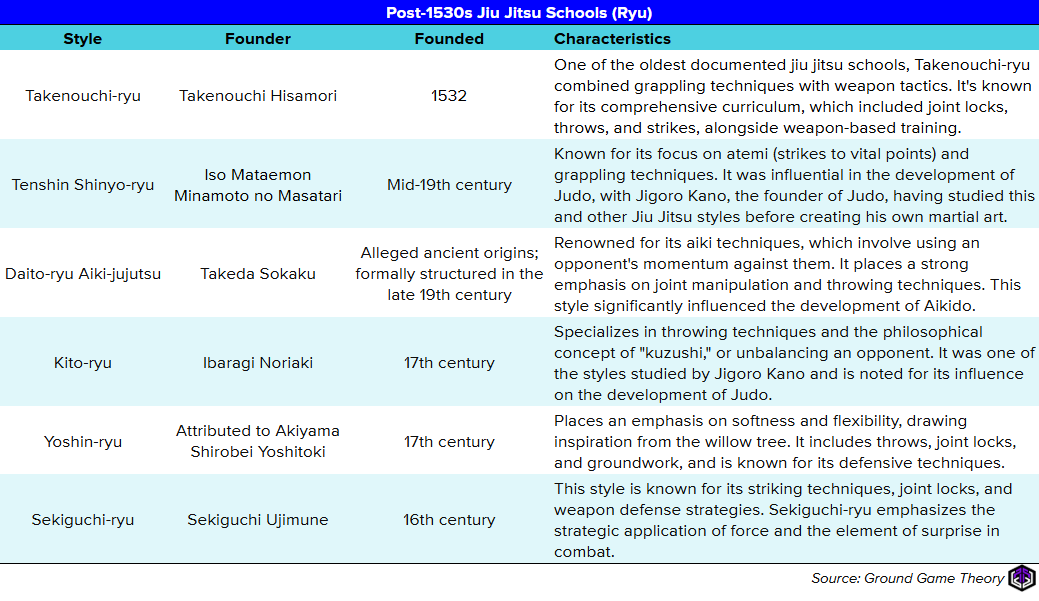
Source: Ground Game Theory
Evolution and Integration
The diversification of Jiu Jitsu styles after the first schools' establishment led to a rich tapestry of techniques reflecting the unique philosophies of their founders. This cross-pollination of styles contributed to new martial arts forms, including Judo in the late 19th century, which further influenced Brazilian Jiu Jitsu (BJJ) and modern mixed martial arts (MMA). These developments highlight Jiu Jitsu's core principles: efficiency, adaptability, and the intelligent application of force.
Conclusion
The historical journey of Jiu Jitsu, from its samurai origins to its integration into modern martial arts, illustrates the art's profound adaptability and enduring significance. As we explore Jiu Jitsu's evolution, we gain insight into a martial art that is more than just a method of combat; it is a cultural heritage that continues to influence and inspire practitioners around the world. In our next post, we will delve deeper into the globalization of Jiu Jitsu and the pivotal role of the Gracie family in shaping its legacy.
Ready to take your martial arts journey to the next level? Unleash your potential at Ground Game Theory, Miami's premier martial arts academy for No-Gi Jiu Jitsu and Mixed Martial Arts (MMA) of all ages and skill levels. Whether you're interested in taking Jiu Jitsu classes recreationally, the dynamic challenge of competitive submission grappling, or seeking the best martial art for self-defense, we have something for everyone. Click here to sign up for a free trial class and see why we're the premier martial arts academy in Miami, FL for jiu jitsu for kids and adults alike. Learn more by following any of the links below ↓
Website:groundgametheory.com
Instagram: instagram.com/groundgametheory
Facebook: facebook.com/GroundGameTheory
YouTube: youtube.com/@groundgametheory