

Introduction
Imagine the ability to defend yourself in one-on-one situations and overcome opponents twice your size. Welcome to the world of Jiu Jitsu, a ground-based martial art where leverage triumphs over brute strength. This blog post aims to set the stage for a rewarding training journey by introducing you to the foundational principles of Jiu Jitsu and preparing you for your first Jiu Jitsu class with suggestions on safety, proper training equipment, and important tips to help you learn at a fast rate.
What is Jiu Jitsu?
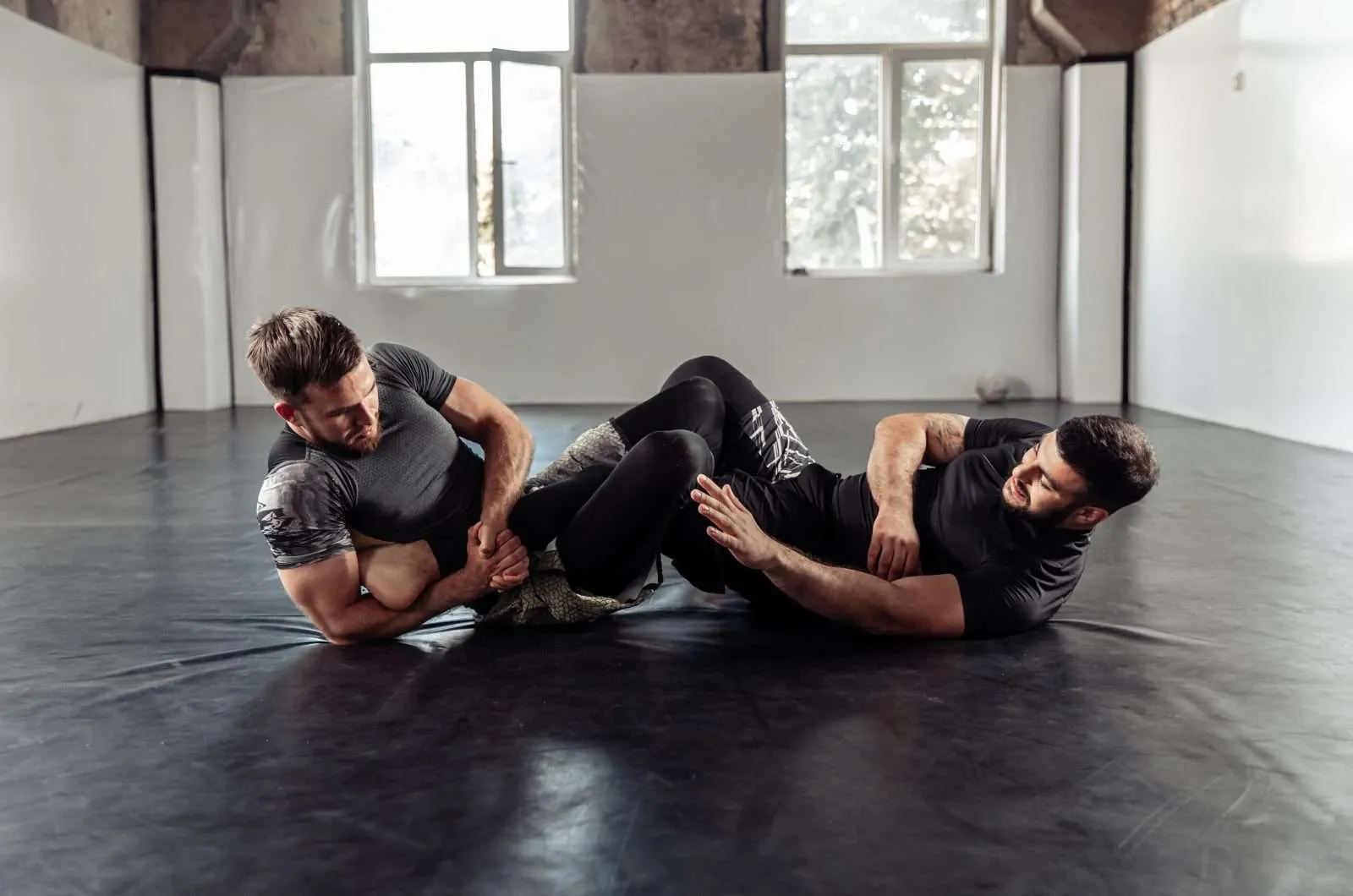
Jiu Jitsu, or submission grappling, is a martial art focusing on ground-based grappling and submissions. The martial art can be done with a traditional kimono (Gi), known as Gi Jiu Jitsu, or without a Gi, known as No-Gi Jiu Jitsu.
Figure 1: No-Gi Jiu Jitsu
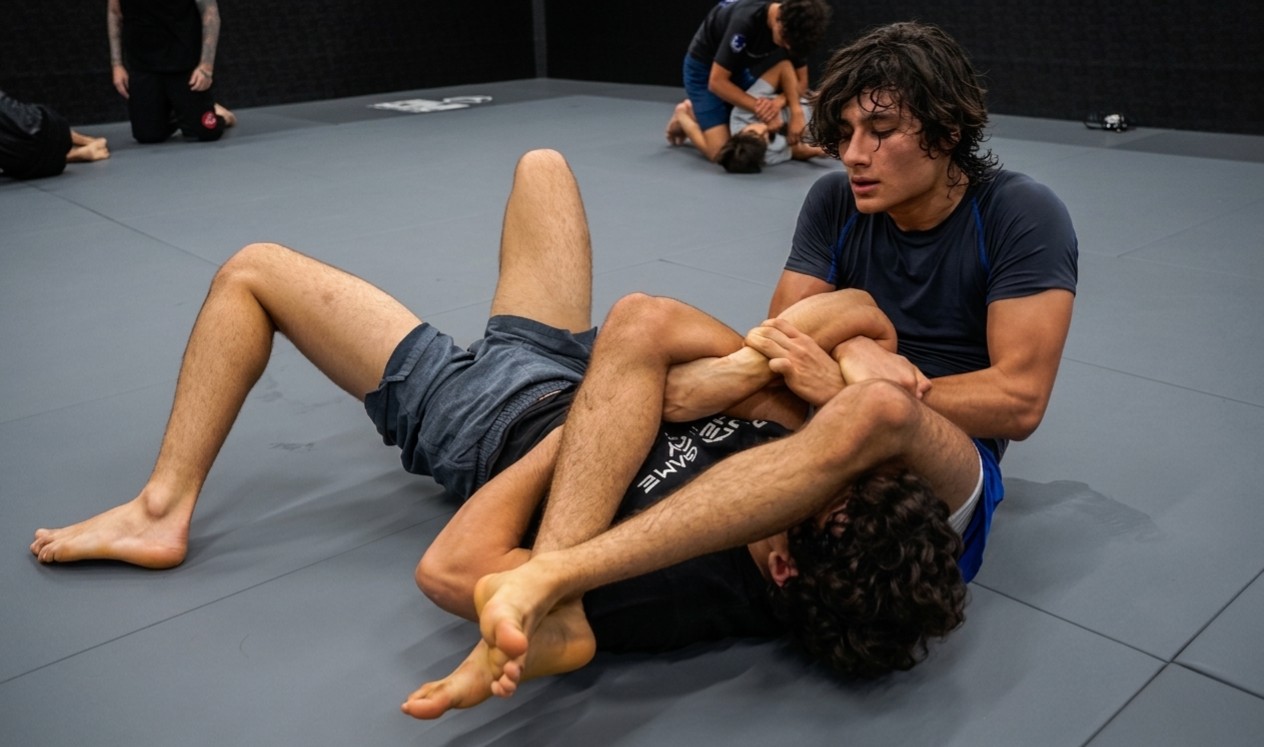
Figure 2: Gi Jiu Jitsu
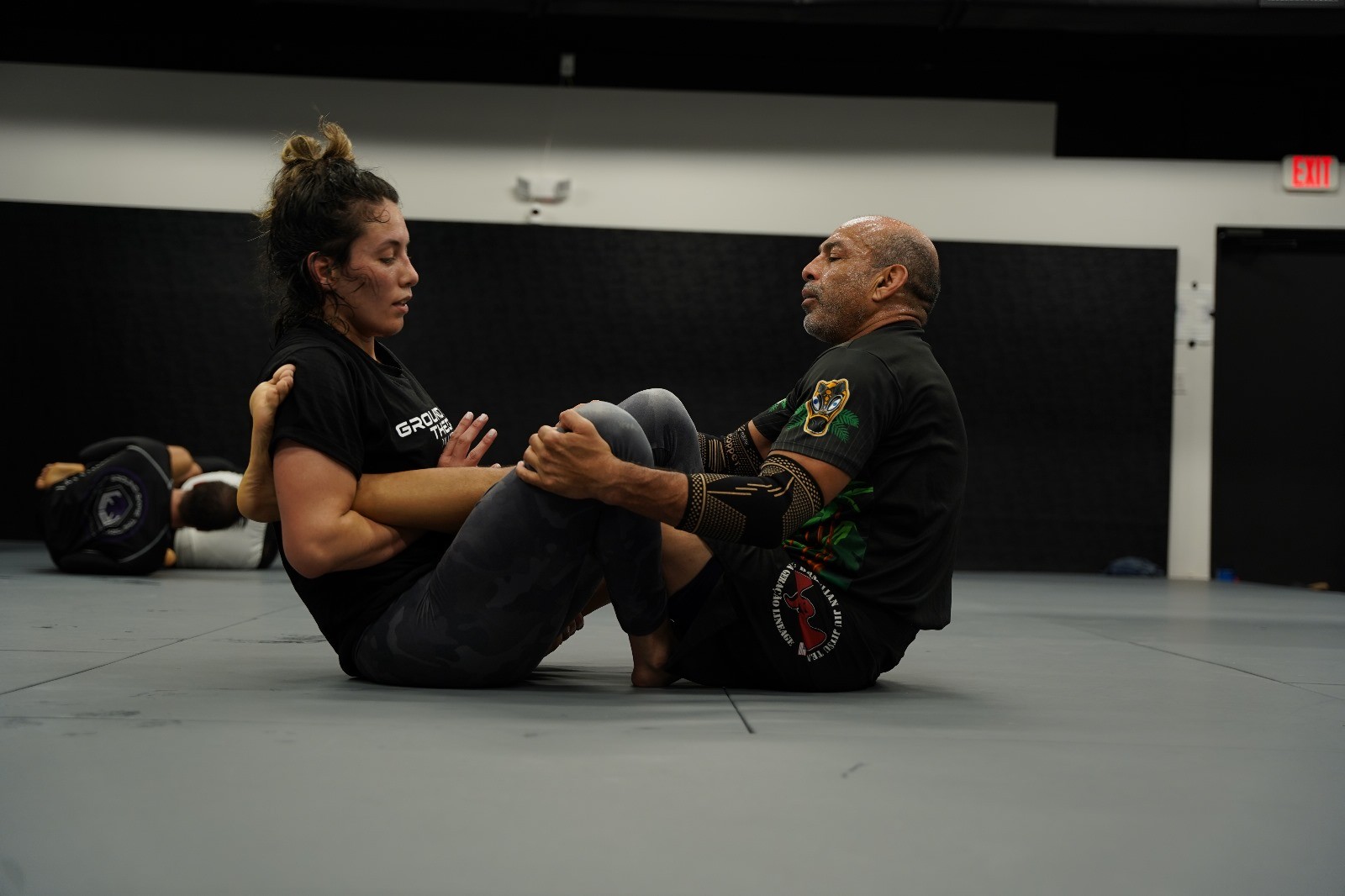
Jiu Jitsu was developed with the philosophy of enabling a smaller person to effectively defend against and overcome larger opponents through technique rather than brute strength. Submission grappling emphasizes the importance of off-balancing, timing, and leverage to take the fight to the ground, control your opponent, and pressure them in pursuit of a submission hold like a stranglehold or joint lock.
Submissions serve a parallel purpose to knockout blows in striking-based martial arts, making it a critical training component for mixed martial arts (MMA) fighters. While knockouts deliver a swift and decisive conclusion through sheer force, submissions offer a more subtle yet equally definitive end to a contest by prioritizing mechanical leverage over power.
Why Train Jiu Jitsu?
Love Martial Arts; Hate Getting Hit: Live sparring in grappling is an arguably safer alternative to sparring in striking-based martial arts like boxing, significantly reducing the risk of brain damage associated with repeated impacts.
Mental Fortitude: Considering that jiu jitsu often requires you to solve dynamic problems under extreme duress, training can provide psychological benefits such as improved mental resilience and strategic thinking.
Cross-Training for MMA: Helps develop better ground control and submissions for MMA.
Self-Defense: Equips individuals with practical skills for self-defense in one-on-one confrontations. However, like other martial arts, these techniques may not be as effective in situations involving multiple attackers.
Physical Conditioning: Provides a rigorous workout that improves overall physical conditioning, including strength, endurance, and flexibility.
How It Works: Jiu Jitsu as a 4-Part System
What is the goal of jiu jitsu in a fight? Though this isn’t a hard and fast rule, Legendary martial arts professor John Danaher once loosely defined jiu jitsu’s role in a fight as a 4-part system:
Takedown: In a 1-on-1 altercation, practitioners look to take the fight to the ground to reduce the chance of a swift knockout blow.
Guard pass: Get past the legs and secure a chest-to-chest pin because the pushing power of the legs is dangerous. Trained fighters can use their legs to wrap you up in a submission or sweep you and even untrained fighters can kick off their back. Passing guard into a pin is defined by the act of getting completely past your opponent's legs and holding at least one hip and shoulder to the floor for a minimum of three seconds.
Apply pressure through pinning: Work your way up through a hierarchy of pins to control and pressure your opponent. Effective pinning is about applying intense pressure to create opportunities for submissions. By mastering pins that opponents dread, you bridge the critical gap between positioning and submission. Targeting an opponent's posture, alignment, and breathing with your pins diminishes their resistance, paving the way for effortless submissions and embodying the essence of Jiu Jitsu: control leading to victory.
Submission: To suffocate or immobilize your opponent, forcing them to concede. While good Jiu Jitsu secures positions, great Jiu Jitsu uses pins and pressures as a pathway to submissions.
Things I Wish I Knew Before Starting Jiu Jitsu
Safety and Injury Prevention
Hygiene: Shower immediately post-training, keep gear clean, and cover wounds to prevent skin infections.
Dynamic Warm-Ups: Begin each training session with dynamic warm-ups to prepare your body by increasing blood flow to your muscles and reducing the risk of injury. Some of our suggested warm ups include:
Controlled Submissions: Practice applying techniques with control, especially when executing submissions, to hone your skill and keep your training partners safe. For example, instead of forcefully hyperextending your training partner’s arm while applying an arm bar, hold it at full extension limit and focus on controlling the arm at the end of its range of motion for three seconds. This period is sufficient to demonstrate your capability to execute the submission fully, without causing harm. Such practice not only enhances your control during submissions but also prevents injury to your partner and provides them an opportunity to safely work on late-stage defensive maneuvers.
Communicate Pre-Existing Injuries: Communicate openly about any pre-existing injuries or concerns before sparring begins to foster a safe and productive training environment.
Understand When to Tap: Learn to recognize when you are caught in a submission and verbally or physically tap out promptly. Tapping out is not a sign of defeat but a learning tool to prevent injury and allow you to train another day.
Banned Techniques: Some techniques, while effective, are so dangerous that they should not be done in the training room.
Rest and Recovery: Pay attention to your body’s signals. Overtraining can lead to burnout and injury. Ensure you have adequate rest between training sessions and address any injuries or soreness.
Injury Management: If you do sustain an injury, consult with a healthcare professional for an appropriate diagnosis and treatment plan. Returning to training without proper recovery can exacerbate injuries and prolong recovery time.
Equipment and Attire
Rash Guards and Shorts: Made from moisture-wicking materials to keep you dry and comfortable, rash guards and fight shorts are designed for flexibility. They aim to prevent snagging, help reduce skin friction, and protect against mat burns.
Compression Pants (Spats): Can be worn under shorts for additional skin protection to help prevent the spread of skin infections.
Mouthguard: A mouthguard is essential for protecting your teeth and reducing the risk of concussion during sparring.
Ear Protection: Wrestling headgear is optional but recommended to help prevent "cauliflower ear," a common injury resulting from friction or impact to the ear.
Knee Pads: Optional but recommended for those with previous knee injuries or to prevent abrasions and bruises during training.
No Jewelry: Remove jewelry and piercings to avoid injuries to yourself and your training partners.
Important Tips for Expedited Improvement
Concepts Are More Important Than Techniques: The most crucial ability in Jiu Jitsu is the capacity to learn. The essence of Jiu Jitsu learning is grasping key concepts and principles rather than amassing techniques.
Hard Work and Consistency: Success in Jiu Jitsu is the fruit of persistent effort, not shortcuts.
Master the Basics: Establish a robust foundation by mastering fundamental techniques such as pin escapes, guard retention, takedown defense, and submission escapes.
Focused Practice: Avoid the allure of the "shiny object syndrome" by concentrating on specific techniques or strategies for targeted improvement.
Prioritize Positional Sparring: Positional sparring is crucial for skill development, offering intensive focus on the nuances of particular positions. This type of sparring might involve starting in a position like the closed guard and working on particular techniques or strategies. In one video, Danaher stated that “positional sparring is where we really put the rubber to the road in terms of developing specific skills” (BJJ Fanatics, 2020).
Teamwork: Progress is fueled by supportive and challenging training partners. Endeavor to uplift your partners, accept defeat gracefully, and contribute to a collective improvement ethos.
Diverse Training Partners: For a balanced development, train with individuals better, equal to, and less skilled than yourself. While more experienced partners can provide valuable feedback and help identify areas for improvement, partners of equal or less experience allow martial artists to expand their creativity by practicing newer techniques still under development. In one interview, Danaher stated, "You want to train with people who are better than you, worse than you, and at the same level as you" (Jiu Jitsu Times, 2018).
Physical Fitness: Augment technique training with strength and conditioning for peak performance. Our suggested martial arts routine incorporates a condensed conjugate system to mirror match-induced exhaustion. In one interview, Danaher stated that “if you don’t have the physical conditioning, you’re not going to be able to apply the techniques” (BJJ Fanatics, 2020). Our recommended routine for martial artists follows a condensed conjugate system to simulate the exhaustion felt in a match:
Conclusion
In summary, this blog post serves as a gateway to the world of Jiu Jitsu, offering insights into Jiu Jitsu, its benefits, and foundational strategies for beginners. It emphasizes the art's principles of leverage over strength, providing a safer training option compared to striking-based martial arts, and enhancing both physical conditioning and mental resilience. The post also highlights the importance of safety, equipment, and a supportive training environment for effective learning and improvement. Readers are encouraged to leave comments, ask questions, or share the post on social media to further engage with the Jiu Jitsu community.
Ready to elevate your martial arts journey? Discover your potential at Ground Game Theory, Miami's top martial arts academy for No-Gi Jiu Jitsu and MMA, catering to all ages and skill levels. From recreational classes to competitive submission grappling and self-defense, we offer a diverse range of programs. Sign up for a free trial class and explore why we're Miami's choice for Jiu Jitsu. Connect with us for more information:
Visit our website: groundgametheory.com
Follow us on Instagram: instagram.com/groundgametheory
Like our Facebook page: facebook.com/GroundGameTheory
Subscribe to our YouTube channel: youtube.com/@groundgametheory