

Key Takeaways
You are not automatically too old to start BJJ in your 30s, 40s, 50s, or beyond.
Age should influence how you train, not whether you train.
You do not need to get in shape before starting.
Older beginners should manage intensity, recovery, partner selection, and existing injuries carefully.
A constraints-led approach can adapt live training around physical limitations without removing resistance.
Progress is better measured by improved timing, positioning, and decision-making than by submissions alone.
Medical safety note: BJJ is a contact sport and carries injury risk. If you have a medical condition, significant injury, or concerns about exercise, consult a qualified healthcare professional before training.
Is There an Age Limit for Starting BJJ?
There is no universal age when someone becomes too old to learn Brazilian Jiu-Jitsu. Adults regularly begin in their 30s, 40s, 50s, and beyond.
What changes with age is how you should approach training. Recovery may take longer, old injuries may matter more, and trying to match the pace of a younger competitive athlete may be unnecessary.
Age should change how you train, not automatically prevent you from training.
Do You Need to Be in Shape Before Starting?
No. You can build fitness through Jiu-Jitsu.
Live grappling develops cardiovascular endurance, strength, coordination, balance, and movement efficiency. Beginners often tire quickly because they use too much tension and energy in unfamiliar situations.
If you have not exercised in years, expect some fatigue and soreness at first. Start at a manageable pace and allow your body time to adapt.
Is BJJ Safe for Older Beginners?
BJJ is a contact sport, so injuries can happen. Smart training can reduce unnecessary risk.
Choose controlled training partners, avoid turning every exchange into a competition, and tap before a joint or limb reaches a dangerous position. Protecting your body in practice gives you more opportunities to keep training.
Existing injuries and physical limitations should also influence how your training is structured.
How CLA Can Adapt BJJ to Your Body
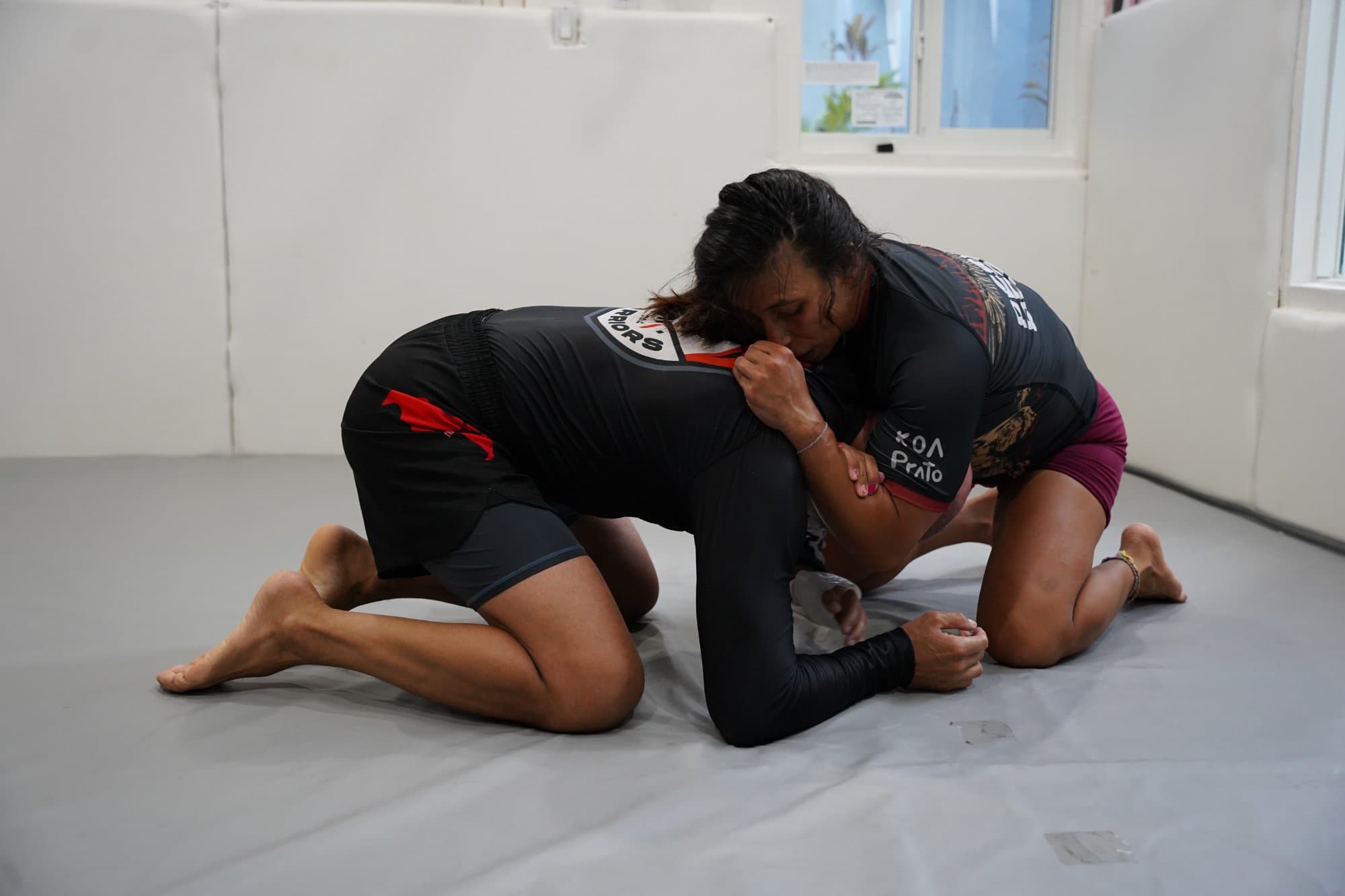
At Ground Game Theory, we use a Constraints-Led Approach, or CLA. Students learn through live interaction with resisting partners rather than static drilling with compliant partners.
Constraints allow coaches to modify the problem without removing resistance.
For example, if standing work aggravates an athlete's knees, hips, or ability to walk comfortably, training can begin and remain on the ground. Other movements, submissions, or positions can also be temporarily removed when necessary.
The athlete still solves real grappling problems against someone actively trying to achieve an opposing goal. The environment is simply designed around what that athlete can safely and productively do.
Live resistance also does not mean maximum intensity. A round can be fully live while still being controlled.
What to Expect From Your First Class
Beginners do not need to memorize techniques before participating.
At Ground Game Theory, students learn through live tasks with clear goals and boundaries. You may start in a specific position with one objective while your partner has an opposing objective.
Because your partner is resisting, you learn to respond to real changes in pressure, balance, movement, and positioning from the beginning.
As your skill improves, the problems become more complex.
How Often Should Older Beginners Train?
Start with a schedule you can recover from.
For many adults, two or three sessions per week is a reasonable starting point. Some can comfortably train more, while others may need less at first.
Pay attention to persistent joint pain, unusual fatigue, and soreness that does not resolve. Long-term consistency matters more than squeezing in as many sessions as possible.
What Progress Looks Like
Progress in BJJ is not just about submissions.
At first, positions may feel chaotic. Over time, you begin recognizing problems earlier, maintaining balance longer, escaping more efficiently, and making better decisions under resistance.
Improved timing, positioning, awareness, and problem-solving are all meaningful signs of progress—even when you are still training with younger or more experienced partners.
Am I Too Old to Start BJJ? The Bottom Line
For most healthy adults, being older does not automatically make BJJ off-limits.
Your age, injury history, fitness, mobility, recovery, and goals should influence how you train. A well-designed training environment can adjust around those factors without making the training passive or unrealistic.
The goal is not to train like a 20-year-old. It is to train in a way that lets you improve consistently.
Looking for Beginner-Friendly No-Gi Jiu-Jitsu in Miami?
If you have been searching for BJJ in Miami but have hesitated because of your age, fitness level, or previous injuries, Ground Game Theory is built to meet you where you are.
Our No-Gi Jiu-Jitsu program uses a constraints-led approach centered on live training with resisting partners. We can adjust starting positions, objectives, and training situations to account for different experience levels and physical limitations while still keeping the training realistic and engaging.
You do not need to get in shape first. You do not need prior grappling experience. And you do not need to keep up with the youngest person in the room.
Come try No-Gi Jiu-Jitsu at Ground Game Theory in Miami and see what training feels like for yourself. Your first step is simply getting on the mat.